
When a new technology brand enters an established market, one question naturally follows: Who is actually behind it?
The digital drawing-tablet industry is already crowded with established names, familiar technologies, and creators who have developed strong expectations about how digital drawing tools should work. Building another brand in this environment requires more than putting a new name on a product. It requires engineering knowledge, product-development experience, an understanding of creators, and a willingness to question what already exists.
That is where DigiDraw's story becomes different.
DigiDraw is a creative technology brand developed by Turing Creative Technology (Shenzhen) Co., Ltd. While the brand itself is relatively new in the global consumer market, its product-development foundation is supported by professionals with extensive experience in digital input technology, engineering, R&D, and pen-tablet development.
At the centre of that background is Luo Wei, known professionally as Leo Luo, an engineer, product leader, DigiDraw founder, and one of the founders of HUION.
His career provides an important part of the context behind DigiDraw: this is not a team discovering the pen-tablet industry for the first time. It is a group of experienced industry professionals approaching the category from a new direction.

Leo Luo's professional background is rooted in engineering and product development.
His work in the technology industry progressed into the development of digital input products and pen-tablet technology. He became one of the founders of HUION and subsequently played a central role in its product development and R&D.
HUION's own published material identifies Leo Luo as a founder and documents his role in shaping the company's product philosophy. In a 2018 report, HUION described its focus on technological R&D and international expansion, while Leo Luo spoke publicly about the importance of innovation and building a Chinese technology brand with global influence.
At IFA Berlin in 2018, HUION identified Leo Luo as its chief product developer. His comments at the event focused strongly on user experience and using customer feedback to improve products and competitiveness.
These details provide a useful window into the thinking that later became part of DigiDraw's foundation: engineering is important, but the technology ultimately has to work for the person using it.
Leo Luo's career also places him among the early figures associated with the development of China's digital drawing-tablet industry.
The industry itself was still developing when HUION was established in 2011. HUION's own history records the company's early focus on technological R&D and its subsequent expansion into international markets. By 2018, HUION stated that its products had reached more than 50 countries and regions, including North America, Europe, and Southeast Asia.
More recent Chinese industry reporting also describes Luo Wei (罗威) as an important figure in the development of the Chinese pen-tablet industry and recounts the early development of digital drawing products, including the company's progression from early prototypes into broader product categories and international markets.
Because of this history, Leo Luo is sometimes described informally as a pioneering figure in China's digital drawing-tablet industry. The description reflects his early involvement in developing and commercialising digital drawing technology in China, although “father of the industry” is better treated as an informal characterisation rather than a formal title.
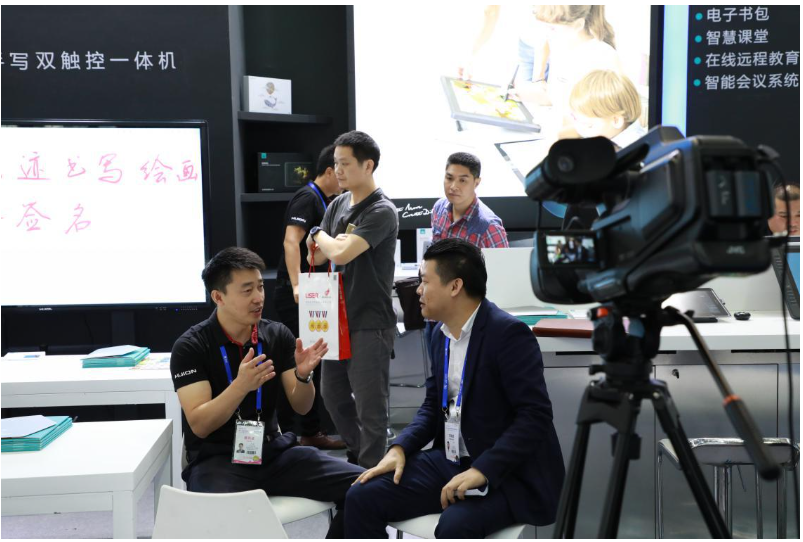
Leo Luo's significance to the story is not simply that he was involved in founding a company.
His background includes the practical work of developing products and building technology.
HUION's public materials show Leo Luo speaking about product development and user experience, while technical certification records from the period also identify Leo Luo in connection with HUION's graphic-tablet product certifications.
The founder's current professional profile describes his role in leading product strategy and R&D through large-scale commercialisation, with product lines reaching more than 100 markets.
That experience spans several stages that are particularly relevant to DigiDraw today:
Engineering and product development
Digital input technology
R&D
Product strategy
User experience
Hardware commercialization
International market development
This creates a very different starting point for a new brand.
DigiDraw did not emerge from a lack of knowledge about the category. It emerged from years of experience inside the category.
One of the most important aspects of DigiDraw's background is that its industry experience is not limited to Leo Luo.
The company's R&D and product-development team also brings decades of combined experience across digital input technology, engineering, pen-tablet development, hardware research, and creative technology.
This matters because building a digital drawing product involves many interconnected technologies.
The pen has to communicate accurately with the device. Pressure response needs to translate naturally into software. Surface materials influence how the pen feels. Displays have to reproduce visual information consistently. Drivers and firmware have to connect the hardware to creative software. Mechanical design affects comfort and durability.
None of these elements exists in isolation.
A team that has spent years working across digital input and pen-tablet technology has an understanding of how those components interact — and where users are likely to encounter problems.
That practical knowledge forms an important part of DigiDraw's product-development foundation.
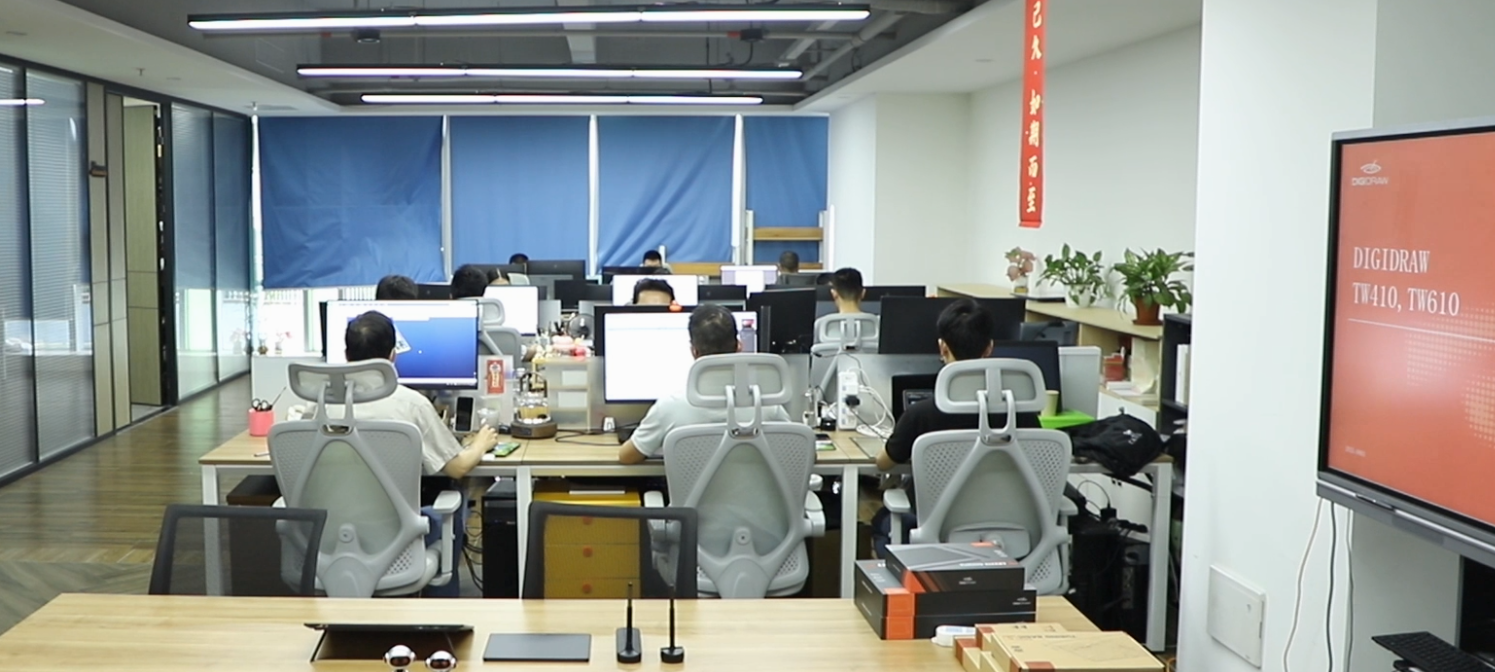
A specification sheet can tell you how many pressure levels a pen supports or how large a display is.
It cannot tell you how much experience went into designing the product behind those numbers.
Industry experience matters because product development involves hundreds of decisions that are not always visible to the customer.
How should the pen respond to subtle changes in pressure?
How should the drawing surface feel?
How should the device behave near the edges of the screen?
How should colour be managed?
How should the product balance performance with portability?
How can the hardware work naturally with the software creators already use?
These are engineering and product-development questions, but they are also creator experience questions.
DigiDraw's background allows these two perspectives to meet.
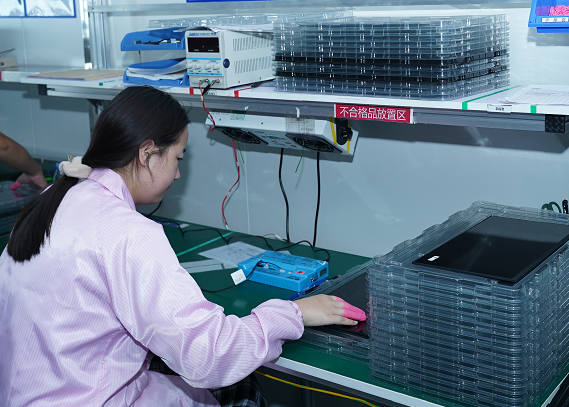
Creating DigiDraw was not simply about repeating what had already been done.
A founder with years of experience in an established category has a unique advantage: the ability to see both what works and what can be improved.
That experience can reveal where creators still encounter friction, where traditional product approaches have become standardised, and where there may be opportunities to rethink the experience.
This is one of the central ideas behind DigiDraw.
The brand can draw on established industry knowledge while still approaching the market with the flexibility of a newer company.
That creates a balance between experience and experimentation.
New brands are often judged by how long their names have been visible in the market.
But a brand's age and the experience of the people developing its technology are two different things.
DigiDraw is relatively new as a global consumer-facing brand. The people behind its product development, however, have backgrounds that extend much further back.
The founder's experience reaches into the early development of the pen-tablet industry in China. The R&D team brings decades of combined industry experience. The company's product-development approach is informed by engineering knowledge, existing technologies, creator workflows, and competitive products.
That creates an interesting position for DigiDraw:
A newer brand built on experienced industry foundations.
Entering a mature technology category gives a company two choices.
It can reproduce what already exists and compete mainly on price, distribution, or branding.
Or it can study the existing category closely and ask whether the experience can be improved.
DigiDraw's direction reflects the second approach.
The brand's product development draws on a close understanding of existing pen-tablet technologies and competing products. That knowledge is not simply used to reproduce established designs. It can also be used to identify areas where creators may benefit from a different approach.
This is where innovation becomes practical.
Innovation does not always mean inventing an entirely new category. Sometimes it means looking at something familiar and asking:
Why does it work this way?
Could it work better?
What does the creator actually need?
Those questions can lead to improvements in pen performance, surface feel, display technology, workflow controls, ergonomics, connectivity, and other parts of the creative experience.

For an engineer, a drawing tablet is a complex piece of technology.
For an artist, it is a creative instrument.
The successful product has to satisfy both perspectives.
An illustrator cares about how naturally a pen follows the hand. A concept artist may care about active area, display quality, and surface texture. A photographer may prioritise precise brush control. An animator may care about pressure response and workflow efficiency. A 3D artist may value shortcuts and precision. A student may simply want a device that is easy to learn.
The technology only becomes valuable when it helps the person create.
This creator-centred perspective is consistent with the product philosophy publicly expressed by Leo Luo during his HUION years. At IFA Berlin in 2018, he emphasised user experience and described customer feedback as a source of direction for improving products and competitiveness.
That philosophy remains relevant to the way DigiDraw approaches creative technology.
DigiDraw's product development can be understood through a simple principle: technology should have a practical purpose.
Pressure sensitivity matters because it changes how naturally your strokes respond.
Pen accuracy matters because your cursor needs to follow your movements.
Surface texture matters because the physical feeling of drawing affects control and comfort.
Colour accuracy matters because your screen needs to communicate your work reliably.
Wireless connectivity matters when it gives you more freedom to work.
Shortcut controls matter when they remove repetitive steps from your workflow.
Ergonomics matters because creative work can involve hours at a time in front of the same device.
The specifications are therefore only one part of the story.
The more important question is what those specifications allow you to do.
DigiDraw's vision is not based on the assumption that everything developed by previous generations of technology is wrong.
Quite the opposite.
Understanding the history of a technology can make it easier to recognise where genuine improvements are possible.
The founder's experience provides knowledge of how the pen-tablet industry evolved. The R&D team's experience provides practical understanding of engineering and product development. The newer DigiDraw brand provides room to experiment with new ideas and respond to changing creator expectations.
This combination is particularly relevant as the creative industry itself changes.
Artists today work across digital illustration, animation, game development, 3D creation, photography, video, education, content creation, and increasingly hybrid workflows.
Creative hardware needs to evolve with those workflows.
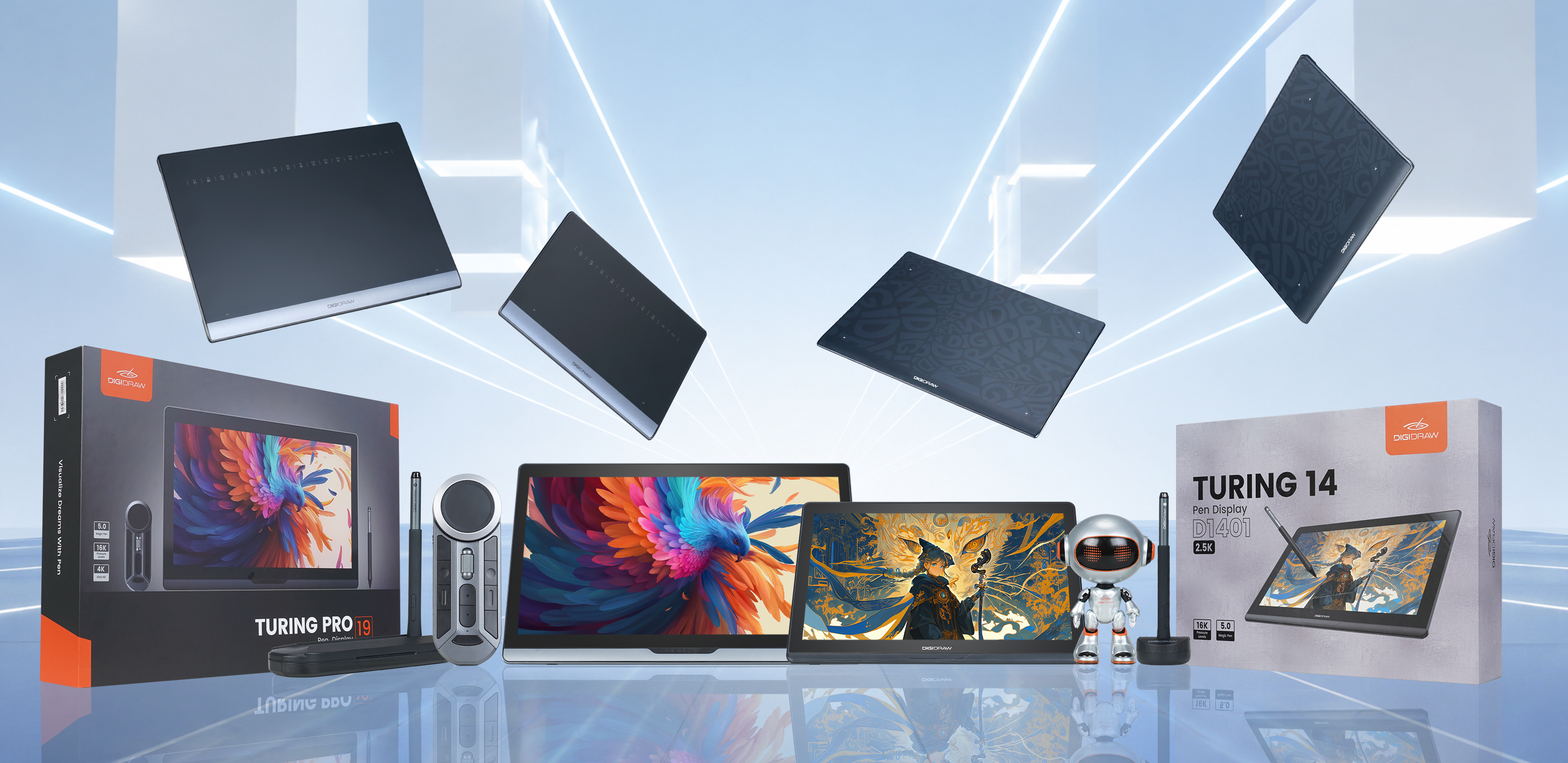
DigiDraw's Turing product family reflects this broader understanding of creative work.
The range includes different types of digital drawing hardware, from pen tablets and wireless models to pen displays designed for more direct on-screen creation.
The objective is not to suggest that every creator needs the same technology.
Instead, different creators can approach digital work in different ways.
A beginner may value simplicity.
A professional illustrator may prioritise pen response and display quality.
A mobile creator may prioritise portability.
A designer may value precision and shortcut controls.
A professional studio may require a larger display and more advanced workflow capabilities.
A broader product ecosystem can accommodate these differences.
Leo Luo's previous experience also extends beyond product engineering.
Building a technology brand requires understanding how products move from development into real markets.
HUION's history provides evidence of that international progression. In 2018, the company reported that its products had already reached more than 50 countries and regions, including North America, Europe, and Southeast Asia.
The founder's current professional profile describes experience extending through large-scale global commercialisation and product lines reaching more than 100 markets.
This background provides DigiDraw with an understanding that goes beyond hardware.
It includes product strategy, international markets, commercialisation, creator communities, and the different expectations that come with serving users around the world.
The most interesting part of DigiDraw's story is not simply that it has an experienced founder.
It is the combination of experience and reinvention.
The founder brings an engineering background and years of experience in the pen-tablet industry.
The R&D team brings decades of combined industry experience.
The company understands existing technologies and competing products.
But DigiDraw is not simply trying to reproduce the past.
The brand was created to explore what comes next.
That means taking lessons from established technology while remaining open to different approaches to product design, creator workflows, and digital expression.
There is an important difference between using experience as a foundation and allowing experience to become a limitation.
For DigiDraw, the opportunity is to use accumulated knowledge to move faster, identify problems earlier, and understand the consequences of product decisions — while still maintaining the curiosity to question established assumptions.
That is where the brand's innovative mindset becomes important.
Experience answers:
“What do we already know?”
Innovation asks:
“What could we do differently?”
DigiDraw's story sits somewhere between the two.
DigiDraw's emergence can therefore be viewed as the next chapter in a much longer technology journey.
It begins with engineering.
It continues through years of product development and R&D.
It expands through the early development of China's pen-tablet industry and the growth of HUION into international markets.
And it arrives at DigiDraw with a new objective: to use that experience to build another generation of creative technology.
For creators, that background does not guarantee that every product will be the right choice. A tablet should always be evaluated according to its actual features, workflow, software compatibility, and intended use.
But it does provide useful context.
DigiDraw may be a new name in the global consumer market, but the experience behind the technology is considerably older.
The digital drawing industry will continue to change.
Creative software will evolve. New forms of digital creation will emerge. Artists will move between illustration, animation, 3D, video, gaming, education, and new forms of content creation.
The tools supporting those creators will need to change with them.
DigiDraw's challenge is therefore not simply to build another generation of drawing tablets.
It is to continue combining engineering experience, industry knowledge, R&D capability, and an innovative mindset to determine what creators may need next.
That is ultimately what makes the story behind DigiDraw worth watching.
A relatively new brand does not necessarily mean a new industry perspective. Sometimes, a new brand is the result of experienced people deciding that the next chapter should be written differently.
DigiDraw is developed by Turing Creative Technology (Shenzhen) Co., Ltd. The brand is supported by experienced engineering, R&D, and product-development professionals with backgrounds in digital input technology and pen-tablet development.
Luo Wei, known professionally as Leo or Leo Luo, is the founder of DigiDraw and one of the founders of HUION. His background includes engineering, product development, R&D, product strategy, and global commercialisation within the digital drawing-tablet industry.
HUION's published materials identify Leo Luo as a founder and, in 2018, as the company's chief product developer. His public comments at IFA focused on user experience and using customer feedback to improve product competitiveness.
Yes. His professional background includes engineering and product development, followed by extensive involvement in digital input and pen-tablet technology.
DigiDraw is relatively new as a global consumer-facing brand. However, its founder and R&D/product-development team have extensive prior experience in the digital input and pen-tablet industry.
The DigiDraw R&D and product-development team brings decades of combined industry experience across engineering, digital input technology, pen-tablet development, hardware research, and product development.
The distinction is the experience behind the brand. DigiDraw combines a newer consumer-facing identity with experienced engineering and product-development professionals who have worked in the digital input and pen-tablet industry for many years.
His early involvement in the development and product leadership of HUION places him among the figures associated with the development of China's digital drawing-tablet industry. Public HUION material documents his role as a founder and product leader and the company's early focus on technological R&D and international expansion.
It is better understood as an informal description rather than a formal title. Leo Luo can more safely be described as a pioneering figure in China's digital drawing-tablet industry, based on his early involvement in the sector and his role in HUION's product development and growth.
DigiDraw's direction is centred on combining engineering expertise and industry experience with a willingness to question established approaches and develop creative tools around real creator needs.


